Born in 1769 as the eldest son of British MP Charles Mellish, Joseph Charles Mellish would go on to be a diplomat, poet, translator, and Prussian nobleman after being disinherited from his father.
Joseph was educated at Eton, then attended Trinity College, Cambridge, in 1786. The following year, he was admitted to the barrister’s Lincoln’s Inn. While in London, Joseph’s life was fraught with excess and gambling. His father heartily disapproved, and when his will was read in 1794 Joseph was disinherited, with only one thousand pounds left to him. His sisters received nine thousand points a piece, although I found some newspaper articles that suggest one disputed her inheritance, and Joseph’s younger brother Henry received the entail and the rest of the income (https://www.nottingham.ac.uk/manuscriptsandspecialcollections/collectionsindepth/family/mellish/biographies/biographyofjosephcharlesmellish%281769-1823%29.aspx).
Joseph would make good, though, first becoming the Chamberlain to the Duke of Weimar in 1798, then becoming a British diplomat to far flung places such as Louisana and Hamburg. Joseph had married a German Baroness, Caroline Freiin von Stein, and had a daughter who would later marry the Royal Prussian Hereditary Marshal of the Landraviate of Thuringia, one son would be a Foreign Office clerk, and the other, Captain DAG Mellish, would fight in Indian in the 1840s. His stint as British Consul of Louisana was in 1809. He then went to Palermo, and in 1814 was sent to Hamburg until his death in 1823.
In addition to his diplomatic work, Joseph discovered a talent for translation and poetry, translating Mary Stuart by Schiller as well as other plays, poems, and books. He was also known to be friends with Goethe, who thought him a well educated man (Bridgwater, P. (2004). De Quincey’s Gothic Masquerade (Internationale Forschungen zur Allgemeinen und Vergleichenden Literaturwissenschaft 80). Netherlands: Rodopi.).

Hodsock Priory – One of the Mellish estates that was bequeathed to Joseph’s younger brother
Joseph is not to be confused with the wealthy London merchant, Mr Joseph Merchant, who was murdered in Hounslow Heath after returning from a day of hunting with his hounds at Windsor (The Victoria History of the County of Essex. (1907). United Kingdom: Constable.).
There is a thorough post about Joseph’s younger brother, who himself was a gambler: https://daringdutycunningplans.wordpress.com/2023/12/30/henry-mellish-gambler-duelist-and-staff-officer/
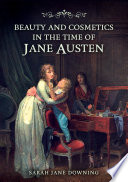
I learned about the Mellish family, as Henry appeared at a masquerade in drag in 1805, when researching my book:

Readers are saying: “fascinating read and it really opened the doors to see what masquerades were really like in the era of Bridgerton and other of my favorite period dramas”
“I would highly recommend this book to anyone interested in the social history of the Regency period, especially those curious about the cultural and performative aspects of elite society. It’s a valuable resource for researchers..”
“This fascinating work of scholarship is a feast for the imagination. The level of detail is incredible; the author definitely did her research!… it is a must-read for anyone who enjoys reading or writing about the Regency era in England.”
Now available in the UK or for pre-order in US
Discover more from Regency Reader
Subscribe to get the latest posts sent to your email.