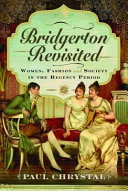
Bridgerton Revisited by Paul Chrystal
 Published by Pen & Sword Books Limited on April 30, 2026
Genres: History / Europe / Great Britain / General, History / Europe / Great Britain / Georgian Era (1714-1837), History / General, History / LGBTQ, History / Modern / 19th Century, History / Modern / General, History / Social History, History / Women, Social Science / Customs & Traditions, Social Science / Women's Studies
Pages: 224
Format: ARC
Buy on Amazon

Bridgerton Revisited reframes Regency England's social world, exposing how power, desire, and hardship shaped the series' historical backdrop.
Bridgerton Revisited is the first book to place the hugely successful Netflix production Bridgerton in its historical context, the Regency Period of English history which ran from around 17295 until 1837.
This eagerly anticipated book is in three parts: Part One examines in detail the social history of the Regency, and is obviously the most recognizable to viewers of the series released so far by Netflix. As such it takes in all aspects of Regency society as enjoyed by the landowning and titled aristocracy in their opulent houses, with their lavish fashions and impeccably prescribed conduct and manners. We learn of the affairs, adultery, sport, leisure and the ardent pursuit of illicit sex in brothels, gambling houses and taverns, of Regency LGBTQ and the endless scramble for the best marriage match as played out in the extravagant balls and at the endless visits and soirées.
Part Two takes a close look at the production itself and discusses its historical accuracy in relation to what we discovered in Part One, and the divergences from that history. Using first-hand evidence from the creators and writers of the production we explore the 'alternate history' underscoring the series, not least the controversial issue of racial diversity in the casting. Part Three looks at the other side of the coin: the plight of the vast majority living and just surviving in Regency England, amidst the routine squalor, poverty, vagrancy, prostitution and occupational disease, workhouses and domestic and sexual abuse navigated daily, particularly by the women of the day.
I received this book for free from in exchange for an honest review. This does not affect my opinion of the book or the content of my review.
I have not read Paul Chrystal’s works before, but I appreciated the opportunity to read his new release focused on the Regency era.
Chrystal’s books cover a broad swath of historical topics. Bridgerton Revisted takes similar approach to the Regency presenting a variety of topics, including an analysis of history as it appears in Bridgerton. The result is a great introductory resource for modern audiences interested in understanding the Regency era. This includes a look at marriage, education, leisure, fashion, politics, and Regency values with respect to these many facets of life. The first part of the book looks specifically at the privileged ton, setting up Part Two’s analysis of Bridgerton. Part Three looks at middle and working classes, including many of the cries for reform that were happening throughout the era.
Although I think the book is targeted at audiences with not much grounding in the Regency era, I do think there are interesting tidbits experienced Regency Readers will enjoy in Chrystal’s book. Chrystal shares Martin Warren’s recent research, for example, demonstrating a high level of heavy metal and arsenic content in the king’s hair suggesting part of his medication regime may have hastened his demise. I also learned about the hobby of drizzling, of unpicking gold and silver threads from tassels and other textile objects that was popular with figures like Princess Charlotte of Wales.
His Bridgerton analysis includes some of the obvious points like corsets and race, but also highlights less discussed points like disability representation including the use of British Sign Language and the writer’s challenges with trying to make the representation as historically accurate as possible.
I would have liked to see more use of primary sources from the era, if only to add some nuance to the conversation — in trying to encompass a whole era, however, in one book nuance is almost impossible. So I can recognize I am a different type of audience than was likely intended — a Regency nerd who wants all the details.
Overall, I would recommend this as a good one stop overview for the era that provides a good sampling of relevant facets of Regency life.
Discover more from Regency Reader
Subscribe to get the latest posts sent to your email.